By Daniel Cymes
As the modern-day consumer grows increasingly conscientious of how his/her purchasing power impacts the environment, fashion and beauty brands have been challenged to seek out executives who can realign company values in an eco-friendly manner. Corporations within the fashion industry have begun to tackle this problem by hiring individuals who hold the title Chief Sustainability Officer, or CSO for short (Mcdowell, 2019, para. 1). Although CSO-like roles are far from a recent phenomenon, only in the past few years has the importance of its position been magnified (Mcdowell, 2019, para. 4). This is directly correlated to a growing number of companies’ focus on the creation and execution of sustainability goals as a part of its business strategy (Bright Outlook for Sustainability Careers, n.d.).
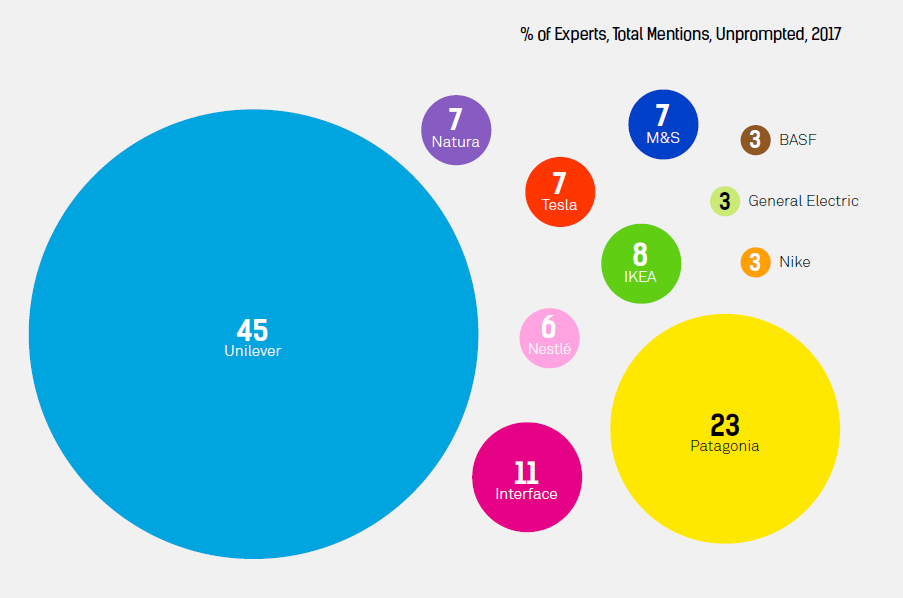
Corporations at the forefront of sustainability measures worldwide based on the percent of sustainability experts polled (Bright Outlook for Sustainability Careers, n.d. para. 4).
In conjunction with these evolutions, the number of companies that employ individuals who hold a CSO position quadrupled between 1995 and 2008 (Bright Outlook for Sustainability Careers, n.d.). Today, the need for the sought after CSO positions have surged to the biggest multinational companies all over the world (Breene, 2014, para. 3). This indicates that an increasing number of brands are not only shifting the aim towards developing products that appeal to the public, but also placing the welfare of the environment at the forefront of its business objectives (Mcdowell, 2019, para. 8).
Realizing that ecology and the economy are not opposing forces is the first step in understanding the roles and responsibilities that a Chief Sustainability Officer possesses (Mcdowell, 2019, para. 12). Companies look to Chief Sustainability Officers in order to find innovative ways to stimulate profit, while simultaneously creating a greener globe (Mcdowell, 2019, para. 10). Companies such as Burberry and Nike have taken major strides in the sustainability game, for both brands have gradually incorporated recycled materials into clothing lines (Mcdowell, 2019, para. 13). Specifically, the British clothing designer Burberry has launched a fashion line that consists solely of recycled materials, in order to combat environmental waste issues (Wightman-Stone, 2019, para. 2).
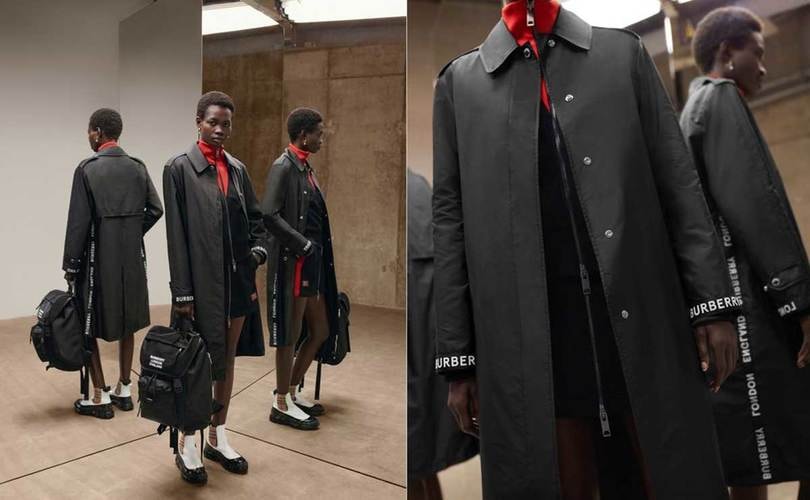
Burberry collection created with Econyl, a sustainable nylon yarn made from recycled materials.
Although Burberry is a luxury brand, the steps it has taken to create an eco-friendly market in the fashion industry will help push a variety of brands to follow suit (Wightman-Stone, 2019, para. 4). For example, companies such as Adidas and H&M are now utilizing sustainability officers in order to further tackle environmental issues like climate change (Mcdowell, 2019, para. 17).


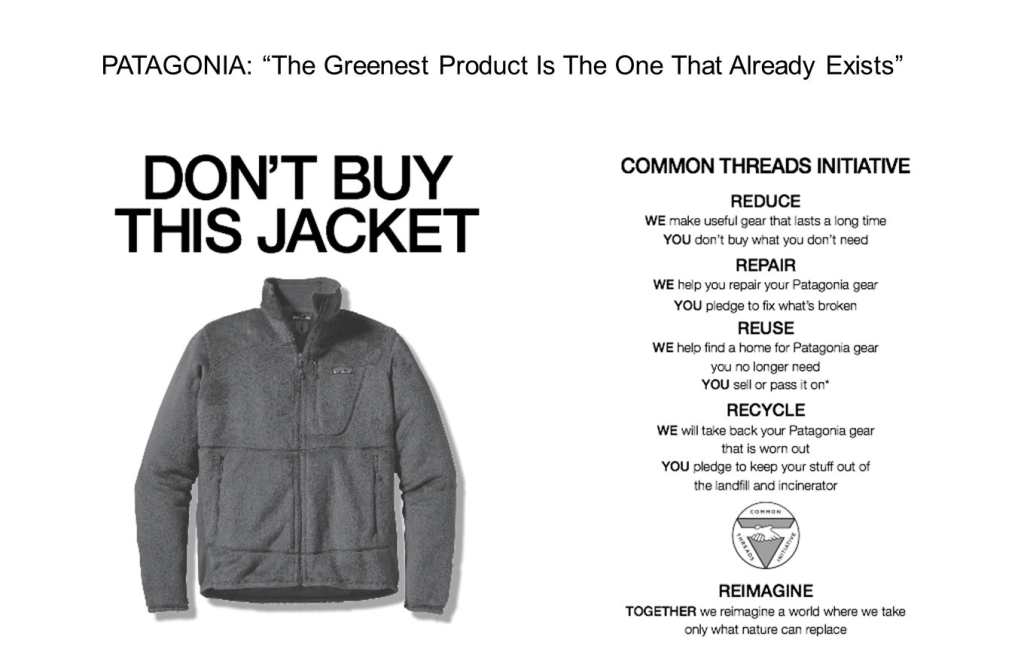

 Sincerely Sustainable